Visions for a Radically Different World: Subsistence Edition
Companion piece to episode 2 of this podcast series

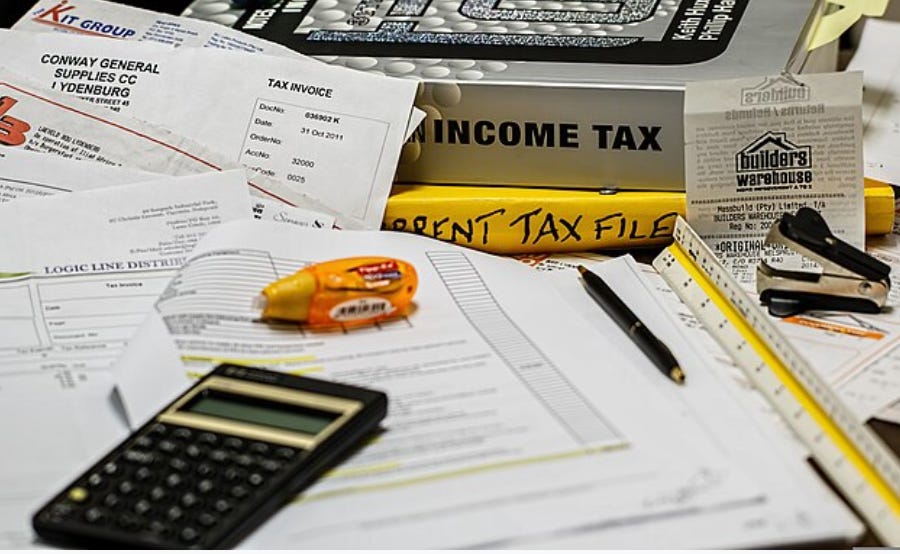
“I can’t guarantee that you won’t get audited.”
“What? Why?”
“This will be the third year in a row you’ve lost money on your investment property. You need to raise the rent.”
I can’t even tell you all the reasons why I felt like this conversation was absurd and why it enraged me. But I can try.
I live in a part of the United States where the housing values are ridiculous, completely out of touch with both the income most people make and also incomparable to similar homes in different parts of the country. They are truly a testament to the fact that “the market” is out of control and made up, no matter what any economist or capitalist tells you.
Putting aside the fact that, for the purposes of this podcast series, I am exploring conversations with people about ALL of the things I think are important, vital, necessary for human beings to thrive, let’s consider the ones most of us have agreed upon for decades; food, shelter, air, water, clothing – the ones at the base of Maslow’s pyramid.
As a parent of twenty-somethings, I felt this acutely when my kids moved out. Not at first, but it didn’t take long. My kids both live in large US cities where the rent costs are ridiculous. One of my kids was struggling to find a place where she could get a lease longer than six months because the state law says that landlords cannot raise the rent within the lease period. So, the shorter the lease period, the sooner the rent can go up. These (mostly corporate) landlords know that moving is expensive, and tenants are more likely to stay put unless they can’t, so they’re raising the rent to the maximum allowed every six months, making it nearly impossible for people to afford a roof over their heads.
Shelter
Why is it expensive to move? Because these (again, mostly corporate) landlords can post an opening and garner dozens of applications for one apartment. When you apply, there is a fee (anywhere from $50-$150 per application), that you have to pay regardless of whether you get the place or not. On top of that, the applicant has to pay for a credit check which is anywhere from $20 to $50. If you don’t get the place, you have to start all over again and it can cost hundreds and hundreds of dollars just to look for a place to rent. On top of that, there are security deposits, pet deposits, first and last month’s rent, and the cost to rent a truck to move your furniture and hook up your utilities.
In one of the cities I have a child living, parking is at a premium and, if you own a car, you can’t risk leaving it exposed during the winter months because of the extreme weather and snowplow activity, meaning that if you’re lucky enough to find an apartment with a parking space, the buildings charge an extra $200-$800 a month for the luxury of parking your car in a secure spot underground where the engine won’t freeze when the temperature is extreme.
Now, imagine you’re a recent college graduate, looking at finding a place to live that you can afford that comes with a landlord who will actually respond when something goes wrong. My kids have experienced insect infestations, broken air conditioning in extreme temperatures, a roof leak that caused the bathroom ceiling to completely collapse (which the landlord simply taped back up and painted over all while ignoring our pleas to do any sort of mold mitigation), and being forced to leave a message via text message and wait – sometimes days – for any response at all.
So when I realized that I had a retirement account that would allow me to help, I jumped at the chance. Could I become my kids’ landlord? Could I sell stock (honestly, I figured that with the current inhabitant of the White House, it was only a matter of time before the economy tanked, anyway – it doesn’t feel like a good investment anymore, not to mention an ethical one) and use the proceeds to purchase a place for each of my kids where they could cover the monthly mortgage payments and I could take care of the rest? We crunched the numbers and it seemed possible, and also somewhat advantageous in terms of taxes because they’re listed as “investment properties,” despite the fact that I don’t think of them that way. In my mind, these properties ensure that my kids don’t have their rent jacked up every six months, that they have a secure roof over their heads, that any significant issues with the property get remedied in a timely manner, and that they don’t have to work three jobs to afford a home.
And therein lies the rub.
“You’re not charging market-rate rent. If you just raised the rent, you’d be less likely to get audited. It wouldn’t look suspicious.”
The entire point is that market rate rent is bullshit.
The entire point is that my kids don’t get gouged by greedy landlords.
This January, the HOA fees at both properties increased. The property taxes have also increased, as have the utility fees. This means that, for the same two apartments, my costs have gone up significantly, and I will – on paper – lose more money this year than ever before.
“You have to raise their rent.”
Yes, my costs have gone up. But my kids’ income hasn’t. So where does that money come from if I raise their rent? Does it come out of their grocery money?

Sustenance.
Does it come out of their gas money? Does it mean they can’t afford a new pair of shoes when they need them?
I understand that costs are going up, and I will absorb those costs. Some landlords can’t. But increasing the burden on the folks who are downstream when the renters can’t afford to absorb the cost, either, feels like pushing in the wrong direction. When 30% of the homes in my own neighborhood are vacant most of the time because they are second homes or used strictly as vacation rentals, and they are listed as “investment properties” that garner the owners millions in tax write-offs, we’ve gone down the wrong road.
I am someone who believes that nobody should have a second home (especially one that sits mostly vacant) until everyone has a first home. Call me what you will, but when we have a California governor who is pushing local leaders to expand building into fragile habitat and create density to “build more housing” and we simultaneously have a surplus of homes that are sitting empty and are used purely for entertainment purposes while hundreds of thousands of Californians sleep on the streets every single night, we are solving the problem in the wrong way.
The first House Rule in my home when I was raising kids was: There is enough of what we all need if we agree to cooperate
The truth is, there is more than enough. And if we have crafted a system that will punish me for trying to ensure that my children have a safe, reliable roof over their heads because it doesn’t look like I’m making a big enough profit off of my own children, this is a system that needs to collapse. If this is a system (and it is) that will punish me for using my resources to support my beloveds by making me pay a tax penalty because the government thinks they can spend my money better than me, that using my money to perpetuate war and line the pockets of billionaires rather than letting me use it to support my own family, this is a system that deserves to implode.
We all deserve safety and sustenance. It doesn’t have to be this hard.
Listen to the companion episode of the podcast here and stay tuned for future episodes.
Many thanks to the folks who have shared their wisdom with me for this series and also to the people who have inspired me and taught me along the way: Inez Aponte, storyteller and changemaker extraordinaire; Ryan (Ra) James Kemp, teacher and visionary; Bayo Akomolafe, philosopher, dreamer, teacher; Alixa Garcia, artist, musician, imaginer of new worlds; Alnoor Ladha, writer, teacher, culture-hacker; Vanessa Andreotti, author, teacher, social justice advocate; Jason Sole, writer, teacher, abolitionist, fierce advocate for a love ethic. I know there are more folks and I’ll call them out as this series continues.
Please use this as a space to let me know what you think of the podcast and if you have ideas for future episodes.
Just listened to the podcast that accompanies this series of pieces. I have about a billion things to say in response! First, loved the guests speaking so honestly and frankly about their own experiences (f bombs included!) about subsistence survival and personal safety. I think it’s important that this conversation was with women, because if we create a society where their safety (and other) needs are met, EVERYONE will be better off. Michelle noting that her box of expired canned goods is experienced as harm "(“hate”), not help.
Some changes could be accomplished with rather simply policy changes: don’t report “jobs added to the economy,” report “jobs with living wages added to the economy.” And I loved hearing about what if we counted “caring” in the economy, with its proper comparative value, and not just, I don’t know, how many durable goods were created in that quarter.
What makes me feel safe? In the past, it was having three months “expenses” in the bank in case of emergency. That took YEARS to build up and was stressful the whole time; AND it participated in capitalism, which damaged nature, I’m sure, instead of being aligned with nature (loved that point). Now, I feel safe when I am in community; when I see a need, I feel safe to know I am together with others to address it. (See social trust in action in Minneapolis and other places.)
Thank you for such a rich, thoughtful discussion. I look forward to more!